


The DigiAgriFood Success Stories section highlights the journeys of producers, cooperatives, and agri-food businesses that collaborated with #DigiAgriFood, using digital innovation services in practice.
Through the Hub’s services and tools, beneficiaries gain access to technologies that can support more targeted decision-making, improved resource management, and more sustainable cultivation practices.
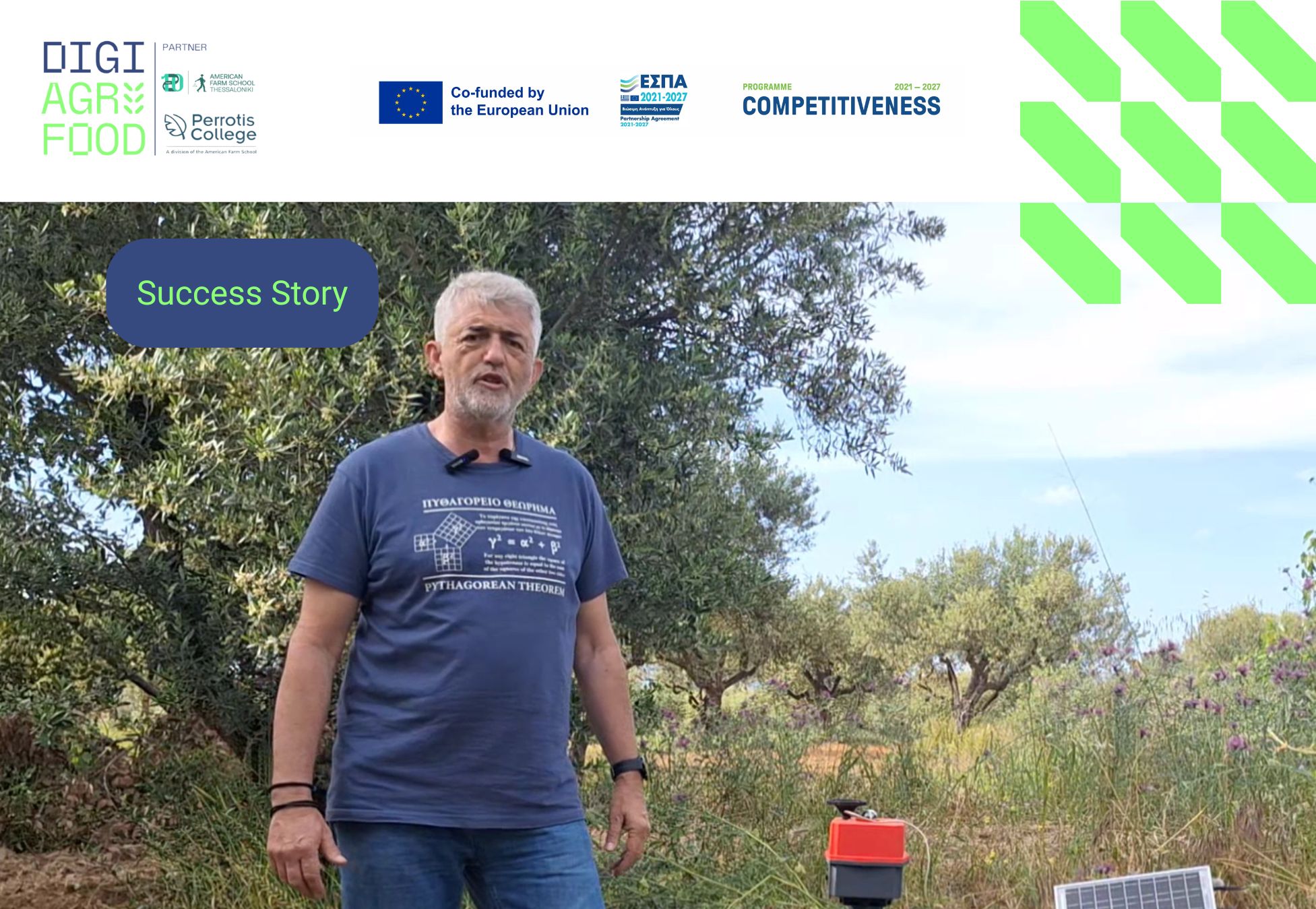
In this context, the DigiAgriFood Success Story | Apostolos Zontanos presents how an agronomist and olive grower from Messinia used smart farming services, with the support of the American Farm School, to obtain real field data from his olive grove and improve the management of his cultivation.
#DigiAgriFood continues to actively support every effort that leads to smarter, more sustainable, and more competitive agricultural production.
Smart farming in olive cultivation
Apostolos Zontanos, an agronomist and olive grower, participated as a beneficiary in the European DigiAgriFood project, using smart farming services implemented with the support of the American Farm School.
Before collaborating with the Hub, the main need was access to reliable and real data from the field. Proper irrigation management, monitoring of meteorological conditions, and a better understanding of the area’s microclimate were critical factors for making more targeted decisions in cultivation.
Through DigiAgriFood, field sensors and modern monitoring equipment for the irrigation system were installed in the olive grove. The sensors record parameters such as temperature, air and soil humidity, as well as changes that affect the microclimate of the cultivation.
Better decisions based on real data
The use of sensor data now allows the producer to have a more complete picture of the conditions prevailing in his olive grove. Particularly important is the monitoring of soil moisture at greater depth, within the active root zone of the crop.
In this way, the producer can identify more accurately when the olive grove actually needs irrigation and avoid unnecessary interventions. The process is no longer based only on experience but is supported by data collected directly from the field.
At the same time, the system enables remote activation of irrigation through a mobile phone or computer. The producer can set the start time and duration of irrigation without needing to be physically present in the field, contributing to time savings and improved day-to-day cultivation management.
Results and benefits
The implementation of smart farming solutions led to more efficient input management and significant resource savings. The beneficiary notes that the use of sensors and the smart irrigation system helped reduce water waste and improve the overall management of the cultivation.
The transition from experience-based irrigation to data-driven decision-making was one of the main outcomes of the service. At the same time, better knowledge of field conditions can support more targeted decisions regarding the management of pests and diseases, reducing the need for unnecessary interventions.
This case demonstrates how DigiAgriFood services can create real impact in practice, supporting water savings, reduced inputs, better use of technology, and sustainable management of agricultural production.
The contribution of the American Farm School
The American Farm School, as a DigiAgriFood partner, supported the implementation of the service both technically and through advisory guidance. Its contribution was essential for the installation and use of the equipment, as well as for supporting the producer in understanding and using the data collected from the field.
This collaboration is a characteristic example of how the Hub brings expertise, research, and innovation closer to producers, giving them access to solutions that can be directly applied in everyday agricultural practice.
What the beneficiary says about the collaboration with the Hub
Apostolos Zontanos emphasises that smart farming and these types of systems represent the future of the primary sector. As he states, producers who integrate such technologies into their cultivation can see significant and positive results in the management of their production.
His experience shows that access to real field data can substantially change the way decisions are made in agricultural production.